
When to Buy Crypto
Common Strategies for Strategic Investors

As the cryptocurrency market matures, with Bitcoin at its forefront, several common strategies for timing the market have emerged. Crypto is famously volatile and the volatility can create emotional responses to recent market buys.
Dollar-Cost Averaging (DCA) Based on Time
Borrowed from traditional finance and markets, Dollar-Cost Averaging (DCA) is a straightforward strategy that involves investing a fixed amount of money at regular intervals, regardless of the asset's price. This method helps mitigate the risk of entering the market at a high point and reduces the emotional impact of market volatility.
For instance, an investor might decide to buy a set amount of Bitcoin every week or month. Over time, this strategy averages out the purchase price, potentially leading to better long-term returns. DCA is particularly beneficial for those new to the crypto market, as it simplifies the investment process and promotes disciplined investing. Exchanges like Coinbase can help investors set a DCA schedule.
Investing $100 a week over the last 2 years into Bitcoin would have resulted in $10,500 invested and a portfolio value of $24,400.
Setting Limits to Buy Under the 200-Week Moving Average
The 200-week moving average is a widely used technical indicator in the financial markets. It represents the average closing price of an asset over the past 200 weeks and helps identify long-term trends. When Bitcoin's price falls below its 200-week moving average, it often indicates a potential buying opportunity, as the asset might be undervalued. Investors can set buy orders to trigger automatically when Bitcoin's price drops below this threshold.
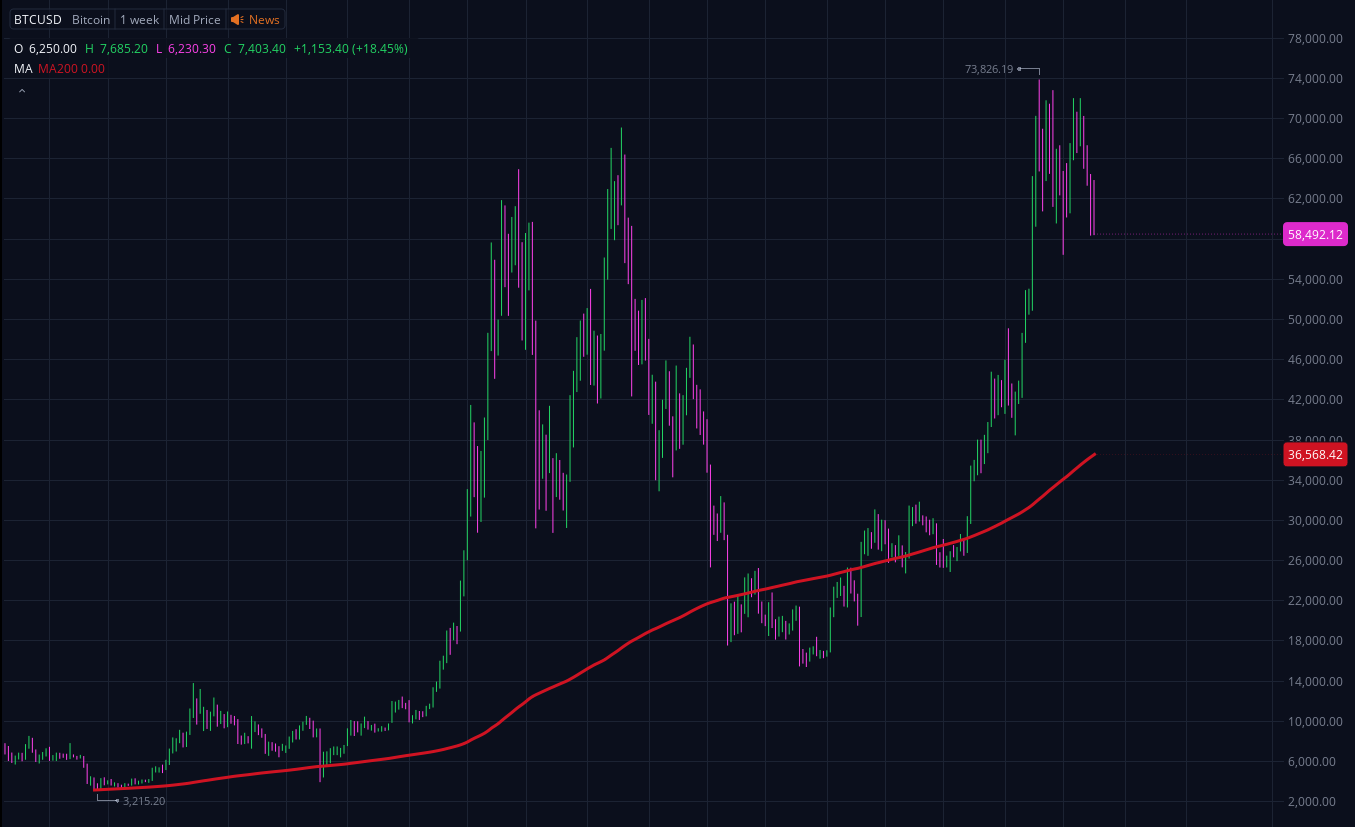
This strategy requires patience and a good understanding of market cycles but can be a powerful tool for buying during market downturns and selling during upswings. It fully isolates you from buying during times of hype but can leave you “sidelined” or buying at a higher price.
Investing $10,000 during the March 2020 dip would have resulted in a 1.8 BTC / $105,000 portfolio today, but if you missed that opportunity, you would have had to wait until June 2022 (after the FTX related liquidations) and only been able to buy 0.44 BTC / $25,777 worth. You would have also missed the opportunity to sell higher and buy back lower again.
Buying Based on the Bitcoin "Rainbow Chart"
The Bitcoin "rainbow chart" is a logarithmic regression chart that tracks Bitcoin's historical price performance and projects potential future prices. It is heavily linked to the mechanics of Bitcoin supply from mining and related price pressure over time. That’s another topic but if you believe in the long-term thesis for Bitcoin to accumulate value, the rainbow chart can show where it is on the projected journey.
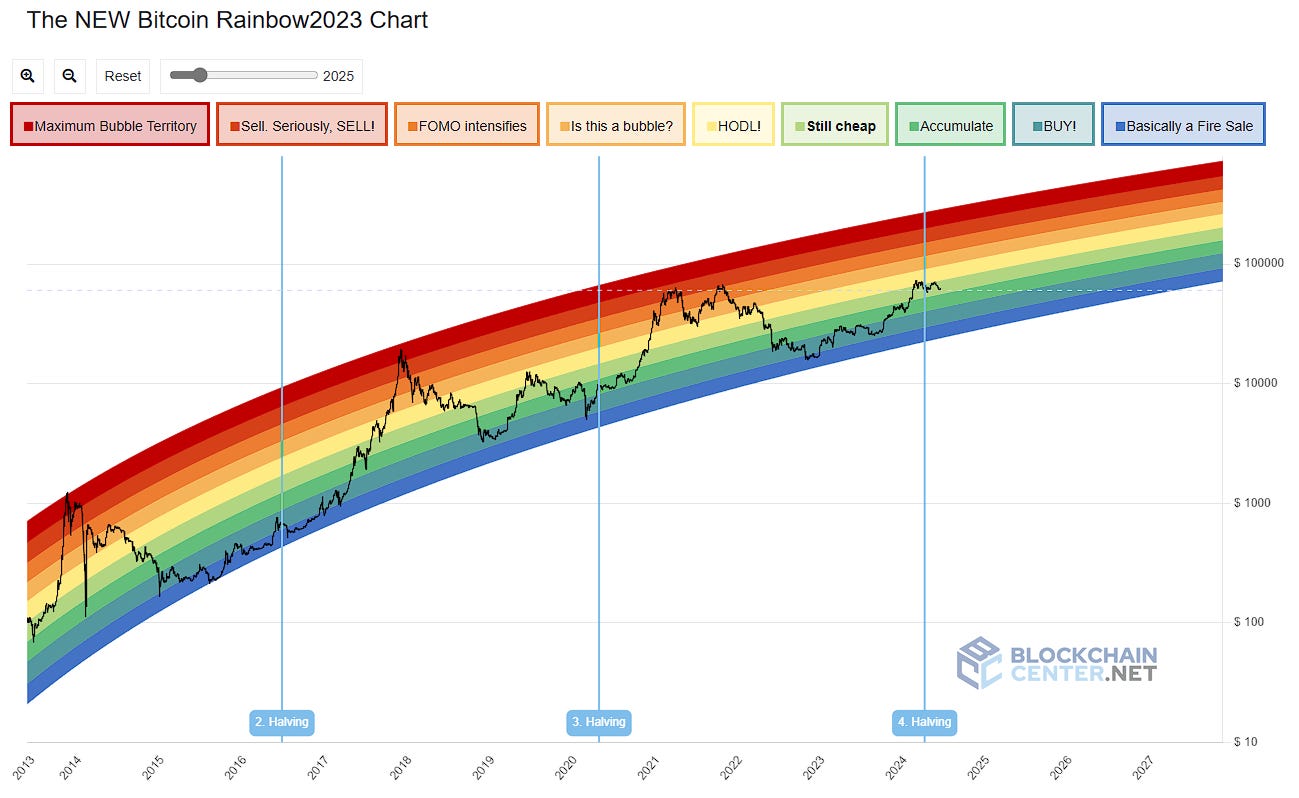
The chart uses color bands to represent different phases of market sentiment, from "fire sale" to "maximum bubble territory." Investors can use this chart to gauge whether Bitcoin is currently overbought or oversold. Buying when the price is in the lower bands (such as the blue or green zones) could signify an opportune time to invest, as these bands indicate undervaluation based on historical performance. Conversely, higher bands suggest caution and possible overvaluation.
Buying based on Market Sentiment and “Fear vs Greed”
The Bitcoin Fear and Greed Index is a valuable tool for gauging market sentiment, providing insights that can aid in making strategic investment decisions. It was created to mirror the Stock and Bond market equivalent. This index measures several knowable factors and infers sentiment based on them. Sources include volatility, market momentum, social media trends, and open interest/futures, to determine whether the market is in a state of fear or greed.
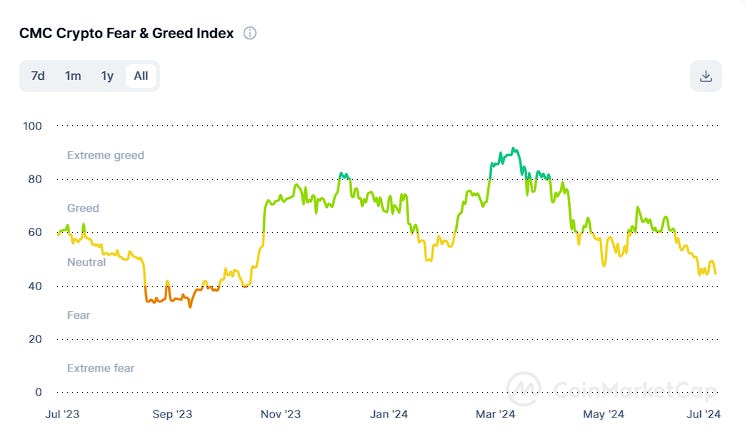
When the index indicates extreme fear, it often suggests that the market is oversold, potentially presenting buying opportunities as prices may be lower than their intrinsic value. On the other hand, extreme greed can signal that the market is overbought and due for a correction, suggesting caution or profit-taking. By monitoring the Fear and Greed Index, investors can better understand the emotional landscape of the market, helping them make more rational decisions, avoid herd mentality, and optimize their entry and exit points in the volatile crypto market.
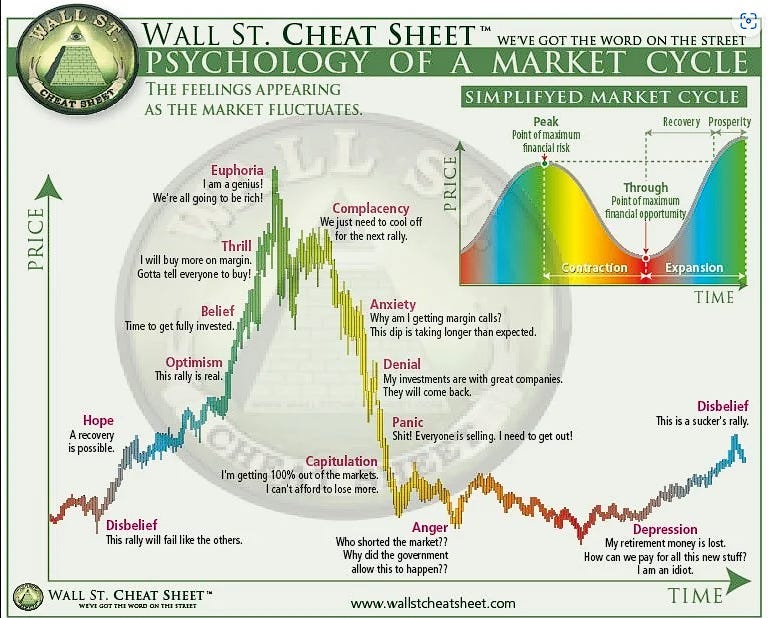
It is worth noting that the crypto market seems able to stay in a state of fear or greed for longer than traditional markets, zooming out and assigning a place on the overall market psychology is often a useful comparison.
Combining Strategies for a Balanced Approach
While each strategy has its merits, combining them can provide a more balanced approach to investing in Bitcoin. For instance, an investor might use DCA for regular purchases while simultaneously setting aside funds to buy when the price dips below the 200-day moving average. Additionally, keeping an eye on the rainbow chart can help identify broader market trends and potential price extremes. This multi-faceted approach allows investors to capitalize on various market conditions, reducing the overall risk and enhancing the potential for long-term gains.
Leveraging Bitcoin Price and Dominance for Altcoin Investments
While the focus of this content is on the price of Bitcoin, the strategies support timing for buys of other assets as well. The impact of Bitcoin's price and its dominance in the crypto market can significantly influence the performance of other cryptocurrencies, known as altcoins.
There are times when Bitcoin is strongly outperforming the market or underperforming alt coins. This is measured through “Bitcoin dominance”, which refers to the percentage of the total cryptocurrency market capitalization that Bitcoin represents.
When Bitcoin's dominance is high, it often indicates that investors are favoring Bitcoin over altcoins, potentially leading to lower prices for these alternative assets. Conversely, a decline in Bitcoin dominance can signal a shift of capital into altcoins, which may then see price increases. Investors can use this information to strategically time their altcoin purchases. For example, buying altcoins during periods of high Bitcoin dominance, when altcoin prices are generally lower, can be advantageous. As Bitcoin's dominance decreases and capital flows into altcoins, these investments can yield significant returns. Monitoring shifts in Bitcoin's price and dominance helps investors make informed decisions about diversifying their crypto portfolios beyond Bitcoin
Conclusion: Navigating the Crypto Market with Confidence
Investing in Bitcoin and other cryptocurrencies requires a solid strategy to navigate its inherent volatility. The psychological comfort of taking a deliberate approach to risk and capital allocation can help you navigate the volatility. It can also isolate you from FOMO (Fear of Missing Out) and Regret from chasing hype and sudden price moves.